Property
How to sell a property development that does not exist yet
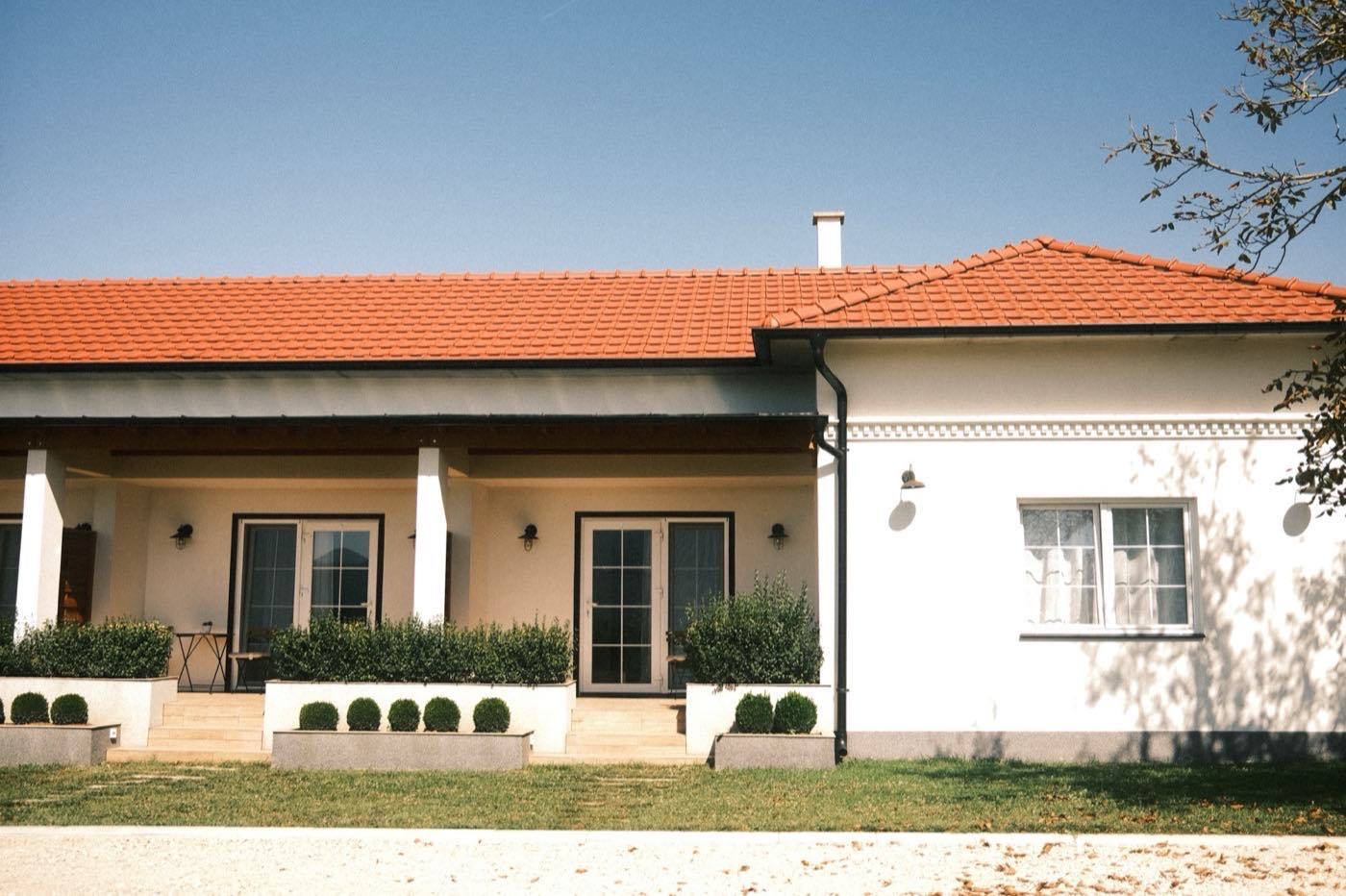
You sell an off-plan development by putting the buyer inside the place, letting them pick a named plot, publishing the guide price and capturing an enquiry that already carries the plot number, the timescale and the funding position. Four things do that work: a scroll-driven opening sequence, an interactive site plan with honest availability, a plain specification document, and a longer enquiry form. The website build for a scheme of this kind runs from £1,795 upwards, with any photoreal CGI paid separately to the visualiser.
You have consent, a set of CGIs from the architect's visualiser, a field with a hoarding on it and an agent asking when the microsite goes live. Completion is eighteen months out and you want reservations before the first slab goes down, partly because your funder's drawdown schedule assumes them. The website's job is to sell six or seven figures of something nobody can stand inside.
Four things move that needle, and prettier renders is not one of them. Put the buyer inside the place instead of showing them pictures of it. Let them pick a specific plot and see honestly whether it has gone. Publish the guide price. Then capture an enquiry that tells your agent the plot number, the house type, the timescale and how the buyer is funding it. The rest of a development site is decoration.
Why almost every development site looks the same
Open five new homes microsites and you will find the same three components. A CGI slideshow that fades between six images. A site plan as a flat PDF download. A contact form with name, email and message. Change the typeface and the photography and you could swap the sites between schemes without anyone noticing.
There is a reason, and it is a process reason rather than a taste one. The brochure gets designed first, by whoever does the print, and the website is the brochure poured into a template afterwards. Print is a linear document you hand to someone standing in front of you. A website is a thing a stranger uses alone at 10pm with two rival schemes open in other tabs.
If you are selling something that does not exist yet, the website is not a brochure for the product. It is the product.
1. Put the buyer in the place
A slideshow shows a buyer six frozen moments. A scroll-driven sequence gives them the approach: the camera lifts off the lane, the sun comes up over the ridge, the terrace assembles along the plot line, windows light one by one. Their scroll position is the transport control, so they set the pace and they can go backwards. It is closer to walking the site than any carousel gets.
There are three ways to build that, and they differ enormously in weight, cost and how much it hurts when the design changes. Anyone who only offers you one of them is selling their own capability rather than answering your brief.
| Route | Weight on the page | Scrubs on scroll? | Rough cost (visualiser + build) | Cost of a design change |
|---|---|---|---|---|
| Real video | 10–40 MB | Badly. Seeking is unreliable on iOS and Android | Visualiser's own fee to animate, plus the build from £1,800 | Re-animate and re-encode. Weeks, and the visualiser bills again |
| Pre-rendered frames | 8–20 MB (250–400 WebP frames) | Perfectly, once loaded | Visualiser's own fee to render, plus the build from £2,000 | Full re-render and re-export. About a week, and the visualiser bills again |
| Procedural canvas | Under 100 KB | Perfectly, from the first frame | From £2,000, no visualiser needed | A code edit. Hours |
Video is what most people ask for and it is usually the worst fit. A browser will not scrub a compressed video frame-accurately, so the effect either stutters or you give up and autoplay it, at which point it is a film and not an experience. It also fights your data budget, which matters more than it sounds.
Pre-rendered frames are the Apple technique, and when the buyer is on fibre they are magnificent, because it is genuinely your photoreal render moving under their thumb. The trap is the re-export. Every time the planners ask for a different roof pitch or you value-engineer the glazing, the whole sequence is wrong and you pay again. On a scheme where the design is still moving, that is how a marketing budget ends up buying the same sequence twice in one season.
Procedural rendering draws the scene in code on a canvas: sky gradient, sun position, cliff or ridge profile, building masses and lit windows, all as functions of one scroll value between 0 and 1. It weighs nothing, it scrubs perfectly on a five-year-old Android, and moving a building is a number change. The honest trade is that it is stylised. It reads as a beautiful diagram of the place, not a photograph of it. That is the approach behind a concept build I made for a Cornish clifftop scheme, which ships no video at all.
So pick by scheme value and by how settled the design is. Under about £5m GDV, procedural or a good set of stills. Between £5m and £20m, procedural for the opening and spend the render money on three or four exceptional interior CGIs instead. Above that, or on prime stock where the buyer is in Zurich and will never visit before reserving, photoreal frames start to earn their weight.
2. An interactive site plan, not a PDF
Selling a development is not selling a development. It is selling one plot to one person, thirty separate times. The buyer does not want an overview, they want to know whether plot 9 backs onto the lane and whether it has gone.
So the plan should be clickable, with every plot carrying its own record: house type, internal area in both sq ft and sq m, plot size, orientation, parking, price and live status. Clicking a plot should open that plot, not scroll you to a generic house type page you then have to reverse-engineer.
Keep sold plots visible and greyed out. The instinct is to remove them, and it is the wrong instinct. Scarcity a buyer can verify with their own eyes persuades. Scarcity you assert in a headline does not, and a site plan that quietly loses plots looks like a website with a bug rather than a scheme selling well.
Below about six units, do not build this. A well-drawn plan graphic with six hotspots and a short availability table does the same job for a tenth of the cost, and nobody needs a CMS to update six rows.
3. Publish the guide prices
Your agent may push back on this. The argument against is that a price on the page loses you the negotiation and lets competitors see your position. The argument for is stronger: competitors already know your position from the portals, and an unpriced scheme collects enquiries from people who cannot afford it.
Work it through. If the four-beds are £825,000 and you publish that, the enquiries you lose are the ones your agent was going to spend twenty minutes disqualifying anyway. Guide prices from, price by house type, a note on which plots carry a premium for the view. Buyers who see a price and enquire anyway have already decided the number is survivable.
Where I would hold back: if the scheme is deliberately priced above local comparables because of specification or plot, a bare number invites the wrong comparison. Publish the price and the reason next to it in the same breath. Silence is worse, because the buyer just assumes the worst and moves on.
4. The specification page is a document, not a sales page
By the time a buyer reaches your spec page they have stopped being seduced and started checking. Write it accordingly: a plain, complete, scannable document, in a table, with no adjectives in it. This is the page serious buyers send to their partner and their solicitor.
The things that get left off, and cost you enquiries by their absence, are the boring ones. Tenure and whether the road is adopted. The estate or service charge, in pounds per year. Warranty provider and length. Heating system, because an air source heat pump is a question in most buyers' minds rather than a selling point. EPC rating, ceiling heights, EV charging, expected completion window by plot, and whether the kitchen has a choice of finishes and by what date the choice closes.
Publishing the estate charge is the single fastest way to kill the hidden-costs objection. A buyer who finds £340 a year on your website trusts the rest of the page. A buyer who finds it in the contract pack six weeks in starts wondering what else you did not mention.
Do the plot-level site plan with prices and honest availability, not the cinematic opening. The sequence gets people to feel something; the plan is what turns feeling into a named plot and a phone call. I would rather sell you the procedural version that converts than the version that photographs well in a pitch deck.
5. Make the enquiry do half the sales call
The standard three-field form throws away everything useful. A development enquiry should arrive already carrying the plot number or house type, the buyer's timescale, their funding position (cash, mortgage in principle, needs to sell, part-exchange), whether they have a solicitor instructed, and how they found you. Five extra fields, and your agent opens the email knowing whether to ring back today or next week.
Yes, longer forms reduce raw submissions. On a £700,000 purchase that is a feature. You are not optimising for volume, you are optimising for the number of conversations that end in a reservation fee, which in the UK typically runs between £1,000 and £5,000 depending on value.
Do not build online reservation payments unless you are selling well over a hundred units. At fourteen plots, the reservation is a phone call and a form your sales agent fills in, and a card-payment flow is expensive scaffolding around a conversation that was going to happen anyway.
6. What SEO can and cannot do for a scheme
Be realistic about where the traffic comes from. Most of it arrives from Rightmove, Zoopla and OnTheMarket, from your agent's applicant database, from local press coverage and from the hoarding. Search is mostly people who already heard the name somewhere and typed it in. That means the site's job is conversion, not discovery.
The searches worth targeting are narrow. The development name plus the village or town, which you will own within days because nothing else is called that. Then the long tail: "new build homes in <area>", "new homes for sale <town>", "four bedroom new build <area>". In a market town that whole cluster might be 40 to 150 searches a month. In a city, a few hundred.
Which is enough to be worth a day of proper work and not enough to justify a twelve-month retainer on a scheme that sells out in fourteen months. Do the basics: one indexable page per house type with the internal areas in the copy, a page about the location that reads like it was written by someone who has been there, the marketing suite on Google Business Profile once it opens, and structured data on the plot records. If you are a developer with a pipeline rather than a single site, ongoing SEO makes sense at company level, on the brand, not on each scheme.
The unprofitable version of that advice: if your scheme is fully allocated to one agent and they are placing it into a warm database, you may need a beautiful, fast, three-page site and nothing else. Spend the difference on the show home.
7. The buyer is standing in a field with one bar
This is the constraint people design straight past. A rural or coastal buyer looks at your site twice: once at home, and once sitting in a parked car at the site entrance with their partner, on mobile data, on a signal that gives them about 3 Mbps. That second visit is the one that matters, because that is where they talk themselves into it.
Do the arithmetic on that connection. A 20 MB frame sequence needs roughly 53 seconds before anything moves. Eight megabytes is still about 21 seconds. A 4 MB hero image on its own is over ten. They will not wait, they will put the phone down, and the most expensive asset on your website will be the reason nobody saw the rest of it.
That Cornish concept build is written to render its largest element in about 1.1 seconds on 4G, because the opening sequence weighs nothing and the images are sized for the screen they land on. That is not clever engineering, it is just choosing the technique that fits the audience. I have written the general version of this in the guide to website speed, and it applies with unusual force here, because your buyers are disproportionately outside, in the countryside, in a car.
What this should cost
The website itself runs from £1,795 upwards, and I would push towards the top of that when the scheme has no show home and the buyer has to commit off-plan. A single holding page while you wait for consent starts at £495. Photoreal CGI is a separate cost paid to your visualiser and sits outside these figures.
| Scheme | Website build | What that buys |
|---|---|---|
| 3–8 units, £1.5m–4m GDV | From £1,800 | Three or four pages, a proper plan graphic, availability table, structured enquiry form |
| 10–30 units, £5m–20m GDV | upwards | Interactive plot-level plan, page per house type, one strong scroll sequence, spec document |
| 30+ units or prime, £20m+ GDV | Top of the range,, plus your visualiser's fee | Photoreal sequence, CMS-driven availability, per-plot pages, handover to the sales team |
Two warnings on timing. Do not commission the build before consent is resolved, because a change to unit mix at committee means paying for the same site twice. And do not launch six months before you can take reservations, because a site that generates interest you cannot convert just trains people to stop checking.
One caveat on that Cornish build, since I keep pointing at it: I made it to demonstrate the approach for developers, not as a client engagement, so read its figures as illustrative of the pattern rather than as a case result.
If you have a scheme coming forward and want a straight answer on which of these is worth doing, send me the consent, the unit mix and the guide prices. I will tell you what I would build, what I would skip and roughly what it costs, and I am perfectly happy for that answer to be "a simple site and better renders". You can read what a build includes, or just send me the details.